Class prep · Java for TJ: CS Readiness Prep

Learn Java from zero,then practice it on paper.

For students admitted to TJ who will take the CS Readiness Assessment, and for the parents helping them plan. Lessons start from zero and build one idea at a time. The practice is original and written to be worked on paper: tracing code, finding errors and writing methods, each with a complete solution. Built by Neil Kothari, a TJ alumnus.

$395 covers the whole course. The first lesson is free.

Try one. Work it on paper first, without running anything.

Problem 1

  • Test level
  • Multiple choice
  • No calculator

A robot on a grid reports where it is. What does this code print?

final int ROWS = 4;
int row = 1;
char facing = 'N';
row = ROWS;
int col = row;
facing = 'E';
row = 2;
System.out.print("Row " + row);
System.out.println(" col " + col);
System.out.print("Facing ");
System.out.print(facing);
System.out.println("!");
Choose one answer

original problems, each with a complete solution
324
original problems, each with a complete solution
short lessons, starting from zero
36
short lessons, starting from zero
units, from a first program to a complete one
9
units, from a first program to a complete one
timed practice tests
2
timed practice tests

Where to start

A diagnostic first, then the path that fits

Every student starts with a short diagnostic. It shows which units need the most work and sends each student to those units first, so no one spends days on what they already know.

The 18-Day Sprint

For students who already code. A short diagnostic shows which topics need work. Then a day-by-day plan starts with the topics everything else builds on, with two timed practice tests along the way.

The Full Path

For students starting from zero. About twelve weeks, every unit in order, from a first Java program to classes, recursion and sorting.

Eighteen days is only realistic for students who already code. If you are starting from zero, the full path is the realistic one.

Free lesson

Lesson 2.1: Your First Java Program

How a Java program is built, how to print exactly what you want, and how to store values in variables of the right type.

This is the first lesson that teaches Java. It starts with the smallest possible program and builds up one idea at a time.

Problem 2

  • Core
  • True or false
  • No calculator

True or false? A variable of type int that is declared inside main but never given a value holds 0 automatically, so this code prints Docks open: 0.

int docksOpen;
System.out.println("Docks open: " + docksOpen);
Is the statement true or false?

Problem 3

  • Core
  • Multiple choice
  • No calculator

A seed library prints a shelf label. What does this code print?

System.out.print("Seed \"Moon Melon\"\n");
System.out.println("Shelf\\B2");
System.out.print("Packets: ");
System.out.println(40);
Choose one answer

Open the rest of this lesson, free

The full lesson and all 8 of its problems, with every solution.

I am aI am a

Your free lesson opens right here, on this device for 30 days. We'll email you occasional TJ class prep updates. Unsubscribe anytime.

How it works

Java you can trace, write and explain on paper

Students who have never written a line of Java start at the beginning, with what a variable is. Students who already code use the diagnostic to skip ahead to the units that need work. Every unit pairs a short lesson with a set of problems to try on paper before opening the solution.

  • Every problem is original: true or false, multiple choice, multi-part and free response, from quick core checks to long problems that combine several ideas.
  • Every code example is compiled and run, so each answer is checked against what Java actually does.
  • Solutions explain the reasoning step by step, not only the final answer.
  • Two timed practice tests, each with complete explanations, to practice working against the clock.

What is inside

  1. 1Start Here: Diagnostic and Your Plan1 lesson · 20 problems
  2. 2Java Basics5 lessons · 40 problems
  3. 3Methods and Strings5 lessons · 40 problems
  4. 4Arrays and ArrayLists5 lessons · 40 problems
  5. 5Classes, Inheritance and Interfaces5 lessons · 40 problems
  6. 6Recursion and Sorting5 lessons · 40 problems
  7. 7Number Bases and Boolean Algebra5 lessons · 40 problems
  8. 8Building a Complete Java Program3 lessons · 24 problems
  9. 9Timed Practice Tests2 lessons · 40 problems

The take-home program

Learn to build a complete program

One unit walks through building a complete Java program with our own example project: reading data from a file, building a simple window, and putting the pieces together. It teaches the skills, so a student can build their own program with confidence.

The program a student builds is theirs alone. We never write, outline or review a student's take-home program.

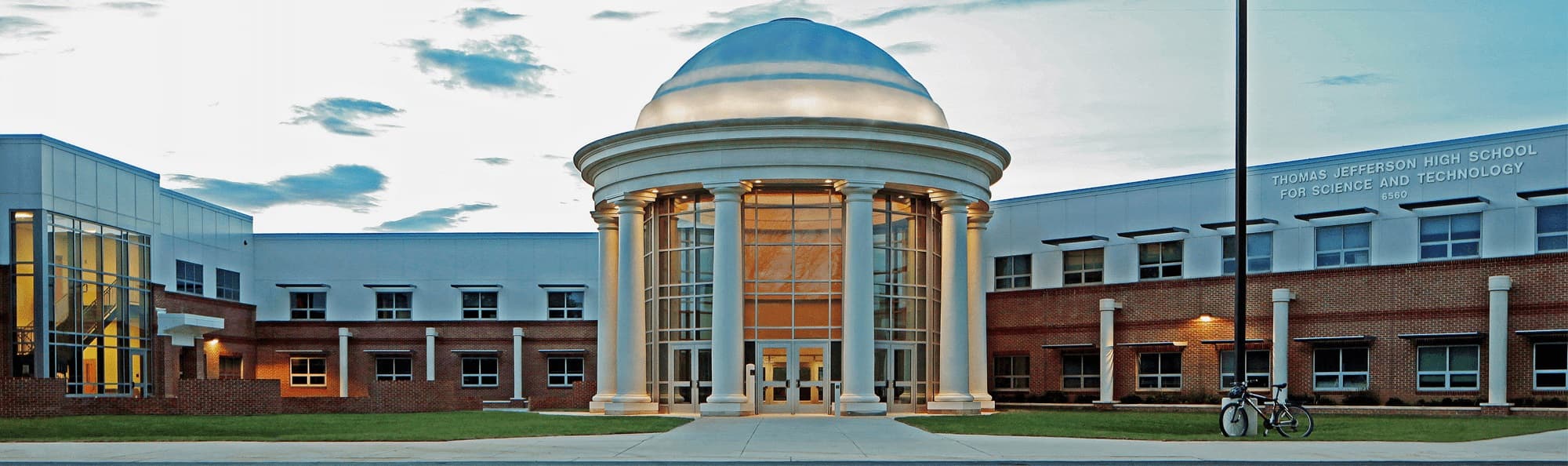
The front entrance of Thomas Jefferson High School for Science and Technology
Neil Kothari, co-founder of EduAvenues

Who built it

Neil Kothari

TJHSST alumnus · Co-founder, EduAvenues · 10+ years in TJ preparation

Neil went to TJ himself and has spent more than a decade working with TJ students and their families. He built this course so students can learn each idea from the beginning and then test themselves on it. Every problem is original, every code example is compiled and run, and every answer is checked before it goes in.

Tuition

$395for the whole course

One tuition covers the whole course: every unit, every lesson, every problem solution and both timed practice tests. The Your First Java Program lesson stays free for everyone.

  • 9 units: 36 lessons and 324 original problems
  • A complete solution for every problem
  • The diagnostic and both study paths
  • 2 timed practice tests with complete explanations
Enroll