Guided Research Mentorship
Research Scholars
From research question to peer-reviewed submission in 12 weeks, with mentor guidance and a finished paper students can stand behind.
Spring 2027 and Summer 2027 Registration Open · View Cohort Dates
The applicants who stand out at selective universities aren't the ones with another summer program certificate. They're the ones with a published research paper with their name on it.
Admissions officers at Harvard, MIT, Stanford, and the Ivies specifically look for this kind of intellectual initiative.
The Mentorship Gap
Serious research needs more than a good idea.
Most high school students don't have access to the guidance required to turn an interesting question into a rigorous, submission-ready paper. We provide the structure, feedback, and accountability to move the work forward.
Our mentors have coached students to TJ SEF and VA SEF wins, top-10 finishes at ISEF, and top-30 finishes at Regeneron STS. Dozens of their students have published in peer-reviewed journals including JEI, Young Scientists Journal, and Curieux Academic Journal.

Guidance at every major checkpoint
From topic selection through journal submission
- Structured mentorship
- 12 Weeks
- Maximum per cohort
- 8 Students
- In peer-reviewed journals
- Dozens Published
- Mentor track record
- Top 10 ISEF

"The difference between participated in research and published author."
Mentors for This Cohort
Who's Guiding Your Student
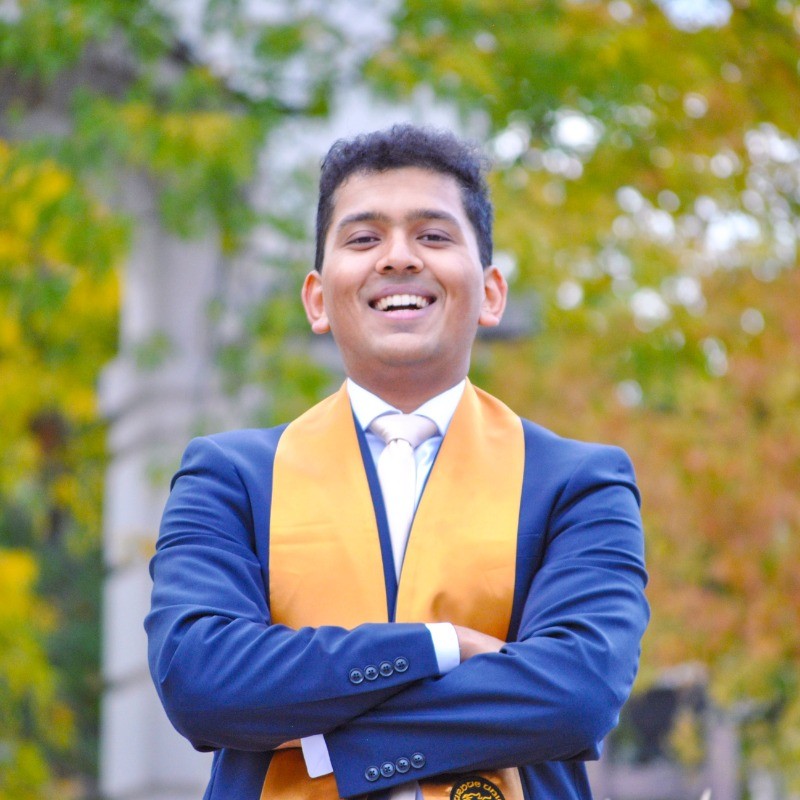
Varun Gannavarapu
Research Methodology & Technical Guidance
PhD candidate in Electrical & Computer Engineering at Stanford. TJHSST alumnus with deep firsthand research experience. Guides students on methodology design, data analysis, and structuring papers for peer review.

Neil Kothari
Admissions Strategy & Publication Positioning
EduAvenues co-founder, TJHSST alum and former Board member. Mentees have published in JEI, Young Scientists Journal, Nature, and IEEE. Focuses on research positioning that strengthens college applications at the highest level.
What Students Create
Every student finishes the program with a polished, submission-ready research paper. Click any example to see the full thesis, methodology, and how it positions a student for admissions.
Representative examples. Actual topics are chosen by students and refined with their mentor during Week 1.
How It Works
Four phases, twelve weeks, one published paper.
Discovery
Topic selection, research question lock-in, initial literature review
Research & Analysis
Methodology development, data collection framework, analysis
Drafting
Full paper draft, structured peer critique, structural revision
Submission
Final polish, journal selection, formatting, and submission
Lock In Your Research Question
Students pitch 2-3 topic ideas. Your mentor pressure-tests each one for viability, data accessibility, and publishability. You leave the first session with a locked-in research question, not a vague direction, a real question.Build Your Foundation
Conduct a literature review, develop your methodology, and build the analytical framework. Your mentor stress-tests your approach before you invest weeks writing in the wrong direction.Write, Critique, Refine
Draft your paper with weekly milestone feedback. Participate in structured peer critique guided by your mentor. Argumentation gaps, evidence quality, and narrative structure are sharpened through multiple passes.Polish and Submit
Final formatting, journal selection confirmation, and submission logistics. Your paper is submitted to a peer-reviewed academic journal. If it isn't accepted on the first attempt, we revise and resubmit at no additional cost.
Program Details
Live Online
4 Wednesday sessions across 12 weeks, 6:30-8:00 PM ET. Recordings and materials posted.
3-5 Hours / Week
Sessions + independent work, manageable alongside coursework
Google Docs
Deliverables submitted with detailed mentor feedback
Parent Updates
Progress summaries shared after each milestone phase

The 4 Live Sessions
Structured checkpoints that shape the research from idea to submission

Between Sessions
Students don't wait weeks for the next seminar. The real work, and real feedback, happens continuously.
Weekly Milestone Deliverables
Lit review notes, annotated bibliography, methodology draft, outline, sections of the paper: clear assignments every week
Detailed Written Feedback on Every Submission
Structure, argumentation, source quality, citation formatting, and methodology rigor, reviewed in detail every time
Personalized Strategic Feedback
Direction, positioning, and quality benchmarks tailored to each student's topic and trajectory
Clear Deadlines and Accountability
Continuous momentum with structured timelines. No drift, no ambiguity. Students always know what's due and when
What happens if a student falls behind?
Each weekly milestone has a 48-hour grace period. If a deliverable is still not submitted, the mentor reaches out directly to the student and notifies the parent. Progress summaries are shared with parents after each phase. The submission guarantee requires on-time completion of all milestones, which is the accountability lever that keeps students on track.
The Guarantee
Complete every milestone and your student is guaranteed submission to a peer-reviewed journal. If the first submission isn't accepted, we cover a full revision and resubmission cycle at no extra cost.
Additional cycles available. Participation requirements apply.
Who This Is For
Rising 9th-12th Graders
Students who want a verifiable academic credential that admissions officers at selective universities actually care about.
Intellectually Curious
Students who want to explore a topic in depth but don't have access to university-level research mentorship on their own.
Serious About Admissions
Families already investing in competitive preparation who understand that differentiation matters more than another line on the activities list.
Competition-Minded
Students considering Regeneron STS, ISEF, or similar competitions who want a complementary publication credential.
Where Students Get Published
Peer-Reviewed Student Journals
Most students target these journals, which are specifically designed for high school researchers and carry real weight with admissions committees.
Journal of Emerging Investigators
Peer-reviewed, run by Harvard graduate students
The Concord Review
The only journal publishing HS academic history papers
Curieux Academic Journal
Multidisciplinary, open to all research areas
Columbia Junior Science Journal
Columbia-affiliated, STEM and social science focus
Young Scientists Journal
International, student-run, peer-reviewed
Intl. Journal of High School Research
Broad STEM coverage, indexed and peer-reviewed
The Ceiling Is Higher Than You Think
These student journals are the baseline. Students with exceptional work have gone on to publish in undergraduate and graduate-level venues (including IEEE, Nature, and other indexed research publications). The quality of mentorship determines how far the work can go.
Planning ahead? See our free list of research competitions, summer programs and journals, with deadlines.
Choose Your Research Scholars Cohort
Registration is open for Spring 2027 and Summer 2027. Each 12-week cohort is capped at 8 students and structured around four live Wednesday seminars.
Tuition
2026–27 Founding-Year Cohorts
$2,195 for any 12-week cohort
One-time tuition. Choose the Spring 2027 or Summer 2027 schedule below.
Spring 2027
February 17 – May 5
Live seminars: February 17, March 17, April 7, and April 28.
Register for SpringSummer 2027
June 9 – August 25
Live seminars: June 9, June 30, July 28, and August 18.
Register for SummerAll live sessions run Wednesdays from 6:30-8:00 PM ET. Recordings and materials are posted.
Looking for private 1:1 mentorship? Research Scholars Premium Individual includes 10 one-hour 1:1 sessions with your mentor over 12 months. Contact us to discuss individual arrangements.
Prefer to work on your own schedule? Research Scholars Self-Paced includes the full 12-week course and three written mentor reviews, with no live sessions. See Self-Paced
Frequently Asked Questions
Common questions from families considering Research Scholars.
What grade levels is this designed for?
Research Scholars is designed primarily for rising 9th-12th graders. Starting in 9th or 10th grade gives students the most time to leverage a publication on their applications, but 11th and 12th graders with strong writing skills can absolutely complete the program successfully.
What subjects or topics can students research?
Students can research topics across the humanities, social sciences, and STEM fields. During the Kickoff session, your mentor works with you to refine topic ideas based on viability, data accessibility, and publishability. Past topics have ranged from public health policy analysis to computational linguistics to historical case studies.
What if my student has no prior research experience?
That's completely fine; most students entering this program don't. The entire 12-week structure is built to teach the research process from scratch: formulating a question, conducting a literature review, developing methodology, writing and revising. Your mentor guides every step.
How much time does this take per week?
Plan for 3-5 hours per week. On weeks with a live session, that includes the 1.5-hour seminar plus independent work. On off weeks, students spend their time on milestone deliverables (lit review notes, drafts, revisions) with a clear assignment each week. The workload is structured to be manageable alongside a full course load.
How are sessions conducted?
All four live sessions are held via Zoom on Wednesday evenings from 6:30-8:00 PM ET. Spring 2027 sessions meet February 17, March 17, April 7, and April 28. Summer 2027 sessions meet June 9, June 30, July 28, and August 18. Groups are capped at 8 students. Session recordings and materials are posted for students who cannot attend live. Between sessions, all deliverables are submitted via Google Docs, where your mentor provides detailed feedback and strategic notes.
Will I receive progress updates as a parent?
Yes. After each of the four milestone phases, parents receive a progress summary covering what the student has completed, the quality of their work, and what comes next. If a student falls behind on a deadline, we reach out to both the student and the parent directly.
What if my student falls behind or misses a deadline?
Each weekly milestone has a 48-hour grace period. If a deliverable is still not submitted after that, the mentor reaches out directly to the student and notifies the parent. Sustained missed deadlines may affect guarantee eligibility, which is itself the accountability lever. In our experience, the combination of clear deadlines, peer visibility, and parent communication keeps students on track.
How is this different from a summer research program?
Most summer programs provide exposure to research but don't produce a finished, submission-ready paper. Research Scholars is output-driven: the final deliverable is a polished academic paper submitted to a peer-reviewed journal. It's the difference between "participated in research" and "published author."
How is this different from Polygence or Pioneer Academics?
Three key differences. First, we guarantee journal submission, not just project completion. Your student finishes with a paper submitted to a real peer-reviewed journal, not a poster or presentation. Second, our mentors have specific competition coaching experience (ISEF top-10, Regeneron STS top-30, TJ SEF/VA SEF wins), not just academic backgrounds. Third, the cohort model means students learn from each other's feedback in live sessions, which mirrors how research actually works at the university level.
What happens if the paper isn't accepted by the first journal?
If a student's initial submission is not accepted, we provide a full revision cycle (including mentor feedback, structural edits, and resubmission to an alternative journal) at no additional cost. Different journals have different standards and focuses, and we work with students to find the right fit. Additional revision and resubmission cycles are available for students who wish to continue pursuing publication beyond the initial guarantee.
Can this work alongside other EduAvenues programs?
Yes. Research Scholars pairs particularly well with CollegePrep Concierge or Insider, which provide the broader admissions strategy. A published paper becomes a centerpiece of the student's application narrative, and our advisors know how to position it.
Build a Paper Worth Submitting.
Spring 2027 and Summer 2027 registration is open. Founding-year tuition is $2,195.
Questions? Email hello@eduavenues.com